When it mattered most

•January 8, 2013 • 2 Comments

by Neil Beltran

Normally, any day I spend on the pond is a good hunt. If the dog gets to work a little and I’m grilling a couple of duck breasts that evening, it’s a great hunt. But there were two outings this season for which I harbored hopes of those rarer times, when there’s constant reason to suddenly hunker down and peak out from a lowered hat brim, when calls ring out, when the air smells like gun powder and the shell belt gets lighter and lighter, because the skies are filled with birds.

One of those outings was when my son came north for a hunt after several years’ absence. Fortune smiled on Griff and me that day on the rice just before Christmas. The other was this Saturday, when the very first guy I ever duck hunted with and his son made a road trip to our waterfowl mecca from their usual desert oasis duck and goose hunting grounds by the Salton Sea. As their truck and decoy trailer rumbled up the state, recent reports had me doubting that my high number refuge rezzie (for a place I’d never hunted) would produce much.

A little back story first

About eight years ago I went to my first Quail Unlimited meeting. No one talked much about quail that night; about ten minutes into it, the subject switched to waterfowling and stayed there the rest of the evening. The message was clear to me: forget this upland stuff, I need to try duck hunting! So I bought waders, borrowed some decoys (from one of the QU guys), and sent in a season long application for Wister, a refuge in the Imperial Valley about 3 1/2 hours from my house. I got lucky with a good draw the first Wednesday of the season, and headed out with my Mossberg pump, the virgin waders, and a dozen dekes in the Volvo sedan’s trunk.

It was windy when I got there around 2 am, the kind of windy where things need to be nailed down or they sail away. I met some guys in the parking lot and eagerly told them I was there for my first duck hunt. They looked at each other and shook their heads ominously. Wanting to take advantage of their expertise, I tapped my shirt pocket and told them I had a brand new duck call but wasn’t sure how  to use it. They didn’t respond.  “When should I call?” I pressed. “Just keep it in your pocket,” they advised, finally. “In fact, don’t even touch it.” What a strange sport, I thought to myself. Of course, now I understand what they meant.

Striding over to the snack trailer, I ordered a coffee and a doughnut. I told the old gentleman who ran the concession that I was there for the first time and didn’t have a clue where to go or really even what to do when I got to my spot. “Is there a good teal pond?” I asked, figuring I could tell a small duck from a big one, even if I couldn’t identify the restricted-take Pintail or the then not legal Canvasback. He suggested maybe I should hunt with his grandson, who was rushing to get there because of the sudden appearance of a good wind but lacked a reservation.

I hooked up with Matt shortly after, and under his patient tutelage ended that first morning with a strap of three teal. I couldn’t have been happier, even after pushing a cart through the special kind of caustic glue-mud I’ve never found anywhere but Wister. The rest is history, and I’ve been waterfowling ever since.

The moment of truth

I met up with Matt and his son Max a little before rezzie call. The kill sheets – and my bottom of the barrel number – weren’t very encouraging, but we went to the window and rolled the dice. After a long trek out, with Matt pushing his huge custom-made decoy cart loaded with goose decoys and me hauling my small load of duck decoys, we made it to our pond. It was nearing shoot time, and in the growing light I gazed dejectedly out at shallow water dotted with clumps of mud and bristly stubble. As we trudged around the pond setting up, I brightened at the sight of goose feathers floating almost everywhere I placed a decoy.

We didn’t really have a choice about where to situate ourselves; our only option was a lone island in dire need of some vegetation Rogaine. Matt brushed us up as best he could as shots around us signaled shoot time had arrived. It wasn’t long before we had customers. Matt convinced a drake Mallard to take a closer look and I bagged him. Then groups of noisy Specks began to criss-cross the sky overhead. I’ve seen these groups before but had to be content with just watching them. But Matt’s a rather legendary goose man and soon they began to heed his call to drop altitude and turn toward. Larger herds with lots of eyes weren’t fooled by our scant cover, but pairs and trios were less able to detect us.  I smiled to myself watching Matt and his son enjoying the visits by Specks, Honkers, and Snows, and thought of hunters in other blinds wondering what kind of Snow call Matt was using. Because the truth is, he doesn’t need a call to summon Snows. Which is why online we refer to him as Mouthcallinmatt.
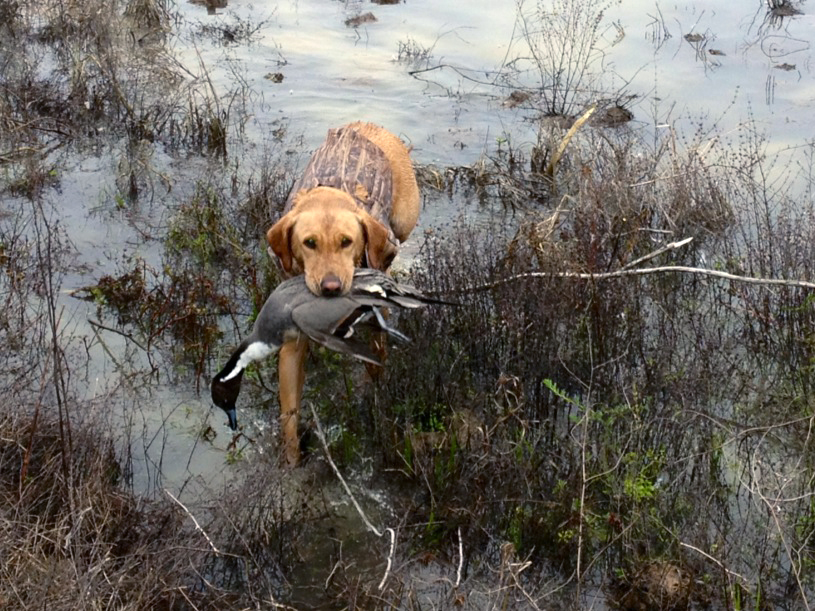
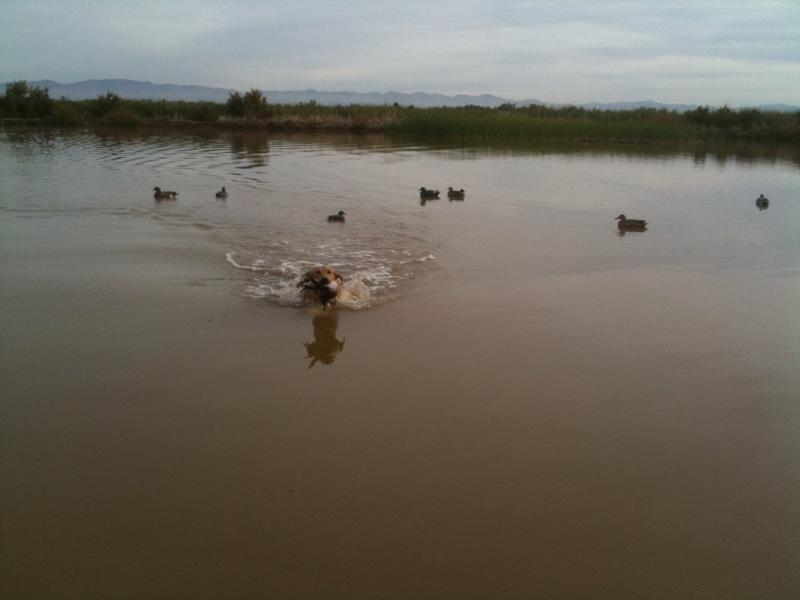
Little Schatzie brought back nine ducks, two cacklers and nine big specks!

Little Schatzie brought back nine ducks, two cacklers and nine big specks!

We saw our share of ducks, too; teal, pins, wigeon, mallards, and even had a couple of colored-up supersonic Bufflehead drakes buzz the tower. The final take for the day?  Nine Specks, one drake Mallard, four drake Wigeons, four bull Sprigs, and two Cacklers – the bountiful glory I’d hoped for but that had seemed so in question. On the way home, I glanced back a few times at a tired young pup, happily sleeping off twenty retrieves. I’ll probably get out a few more times before the season comes to an end, but even when the skies are empty and the guns are silent, I can relish the memory of two great hunts when it mattered most.
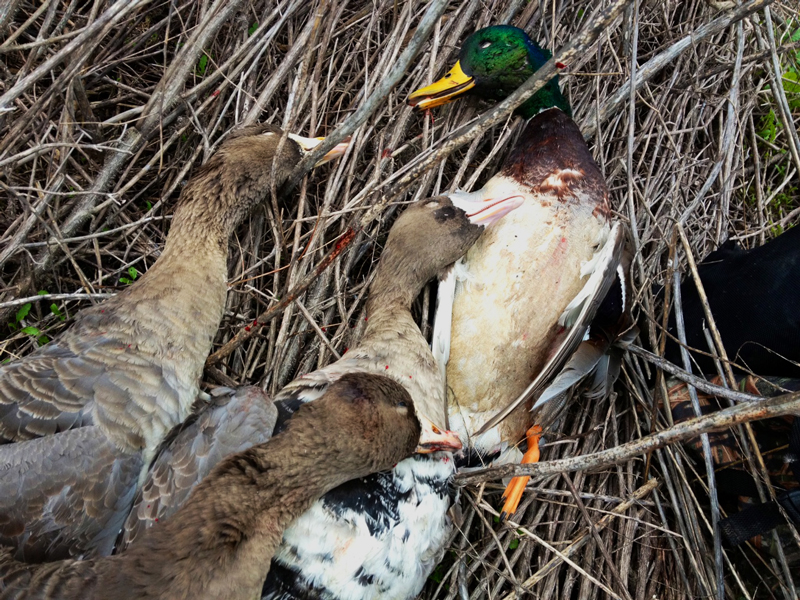
My small contribution to the 20 ducks & geese we harvested
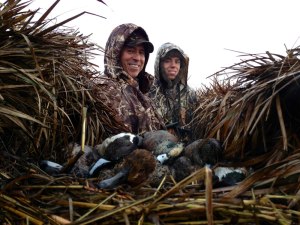
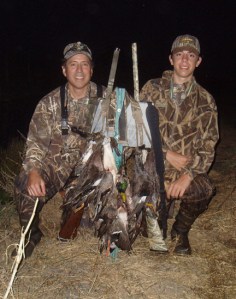
My small contribution to the 20 ducks & geese we harvested
A Memorable Return

•December 22, 2012 • Leave a Comment

My 20-year-old youngest son Griffin and I hunted a flooded rice blind just outside Sutter refuge on Friday, ending his 3-year absence from duck hunting. We had hunted Wister, San Jacinto or a Wilderness Unlimited pond together almost weekly during the season from the time he was 11, but then college, a full-time job, and my relocation to Northern California changed that.

Me and my son Griff, 20, together again in the blind.

Me and my son Griff, 20, together again in the blind.

With no good rezzies for the few days he’d be visiting, I was glad I’d booked a hunt with River Valley Outfitters. We met up with owner Greg Galli at 5:15am and were soon tossing the blind bag, guns, and ourselves onto the stout little Argo ATV for the ride down the dike and across the water to our blind. With no long walk pushing a gear-laden cart or trudging out through a mud-bottom pond , and with heaters in the spacious pit blind — which was already beautifully brushed up and camouflaged, with many dozens of decoys already out — it didn’t take long for Griff to comment “Wow Dad, this isn’t like our usual hunts, this is vacation huntin’!”

Absolutely, and so far, so good. Now I just hoped that this hunt wouldn’t be like most of my rice and refuge hunts this season, where I never even raised my gun. On the way to the blind, we had scared up a few hundred ducks, which was a good sign, but I’d seen other pre-dawn lift offs before — and they’d been the only ducks sighted those days.

It’s always a good day in the blind, and good to be camo’d up alongside the baby of the family once again. But the east started to glow with me holding my breath and praying that Griff’s first time back would be a memorable one. That little prayer was answered when a lone Wigeon came straight at us out of the mist and rain and was felled by one shot from each of us — what we’ve long called the “cone of death,” where that we get the duck is what’s important, not who got it.

Me and Griff at Kern, 2006

Me and Griff at Kern, 2006

The rest of the morning unfolded much the same way, with a single or a pair drifting in to the decoys, or a swarm checking us out in a quick fly by every half hour or so. Most of the time we’d drop one or two. And in between, we were treated to watching huge clusters of ducks — by the hundreds — making their way from feeding back to Sutter’s closed zone. It was good to see Griff taking birds again, after so long away from a shotgun. So much has changed since our first duck hunt together nine years ago, but really, the essence of it is the same. There we were, once again both eagerly watching the skies, eating the same blind snacks as always, working like a team, marveling at the same sights and sounds.

Around 11am, the cold rain had done its work, and satisfied with the day and our bounty of birds, we decided to head back. It was a great hunt, unique and special and important, yet so happily familiar. A memorable return to a place we never really left.

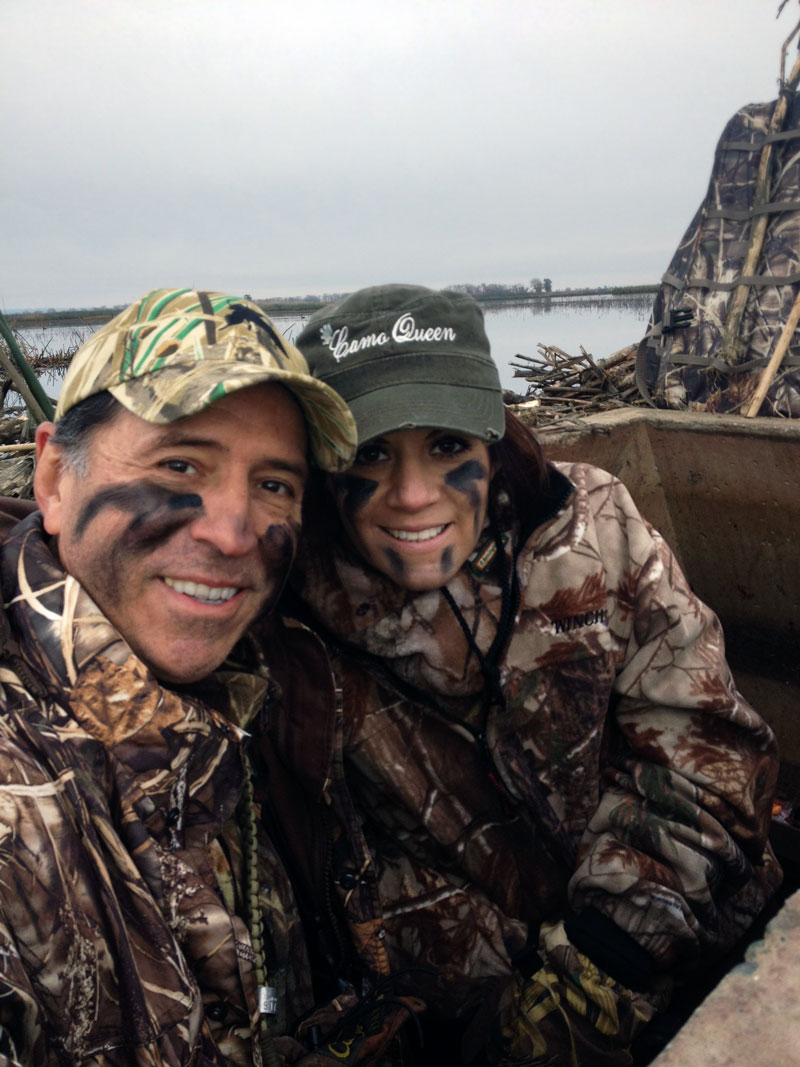
A couple that paints their faces together…

•December 17, 2012 • Leave a Comment

…stays together.

Image

Danielle’s first time out to the pond

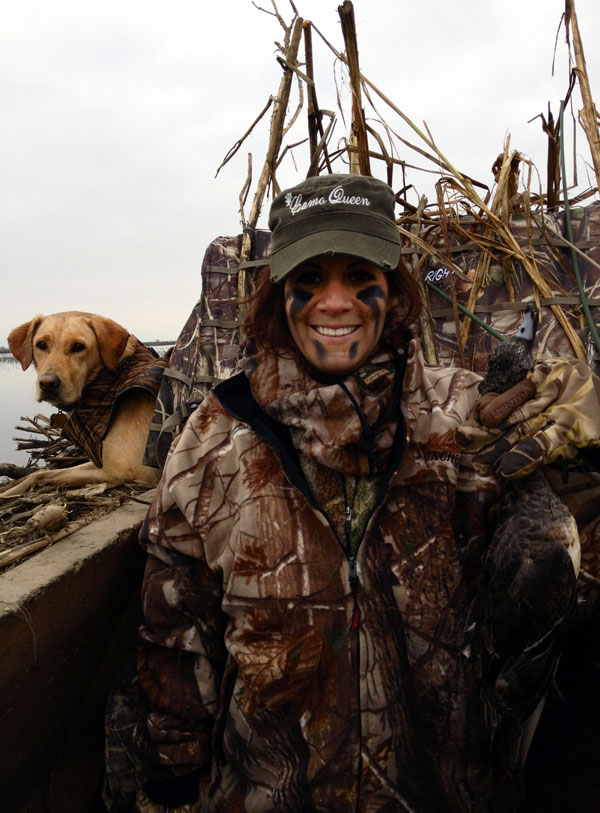
I took my girlfriend out to the pond for the first time on Saturday. Had a good rezzie for Sacramento NWR, so it was the perfect opportunity to show her what it is the dog and I do when we drive off into the early morning dark during duck season.

Outfitted in her new waders and a mix of women’s hunting clothes I’d bought her and some of my son’s stuff from back when he wasn’t 6’3″ and 200 lbs., she took her first ever steps into the black water and muddy bottom of a pond at 5 am. Step by step she slogged through the muck out to our island blind, the dog dancing and splashing alongside her, happy and amazed to have “mom” with us. I think I held my breath the entire time, letting out a big sigh of relief when first one rubber boot then the other was back on land.

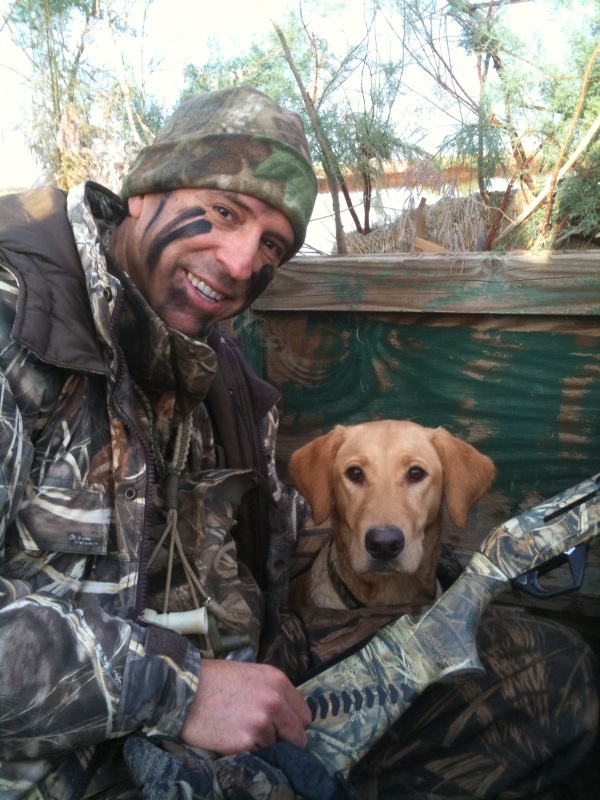
We were blessed with a good morning flight, not close enough to shoot at (unlike the blinds north and south of usnote to self for next trip to Sac) but providing great lesson material for which silhouettes were ducks, geese, and which ones weren’t. It wasn’t long before she was calling out approaching ducks and being right most of the time. Missed a few drive bys and blind sides, but finally doubled on two flying together (a spoon and a wigeon!). Young Schatzie plunged out to the downed birds and grabbed one, brought it halfway back, dropped it, then went to retrieve the other, grabbed it, dropped it, went back to the other until I finally went out and gave her a hand. Guess it’s retriever school for the pup.

We ate some blind snacks — trail mix, fruit, lunchables (a tradition my kids started) — watched big noisy Vs of specks and snows overhead, and then decided to call it a day. A very successful day, in many ways.

Back at the truck, I told her how proud I was of her, trying something new and a little scary, putting up with the wet and cold (and lack of proper facilities), wading through the pond without falling in, and going above and beyond the “bye, have a nice time” send off that most women give their duck hunting men.

She told me she was amazed by how much work it is, getting ducks. All the planning and effort, the sweat and hauling, and all the time that goes into it. “I can’t wait to set the next person straight who says you’re just out here whacking Daffy Duck as he swims back and forth in front of you.”

Yep, a very successful day.

Image

Danielle and my wigeon, AKA this week’s duck dinner.


Blue Bills on the Bay

•December 16, 2012 • Leave a Comment

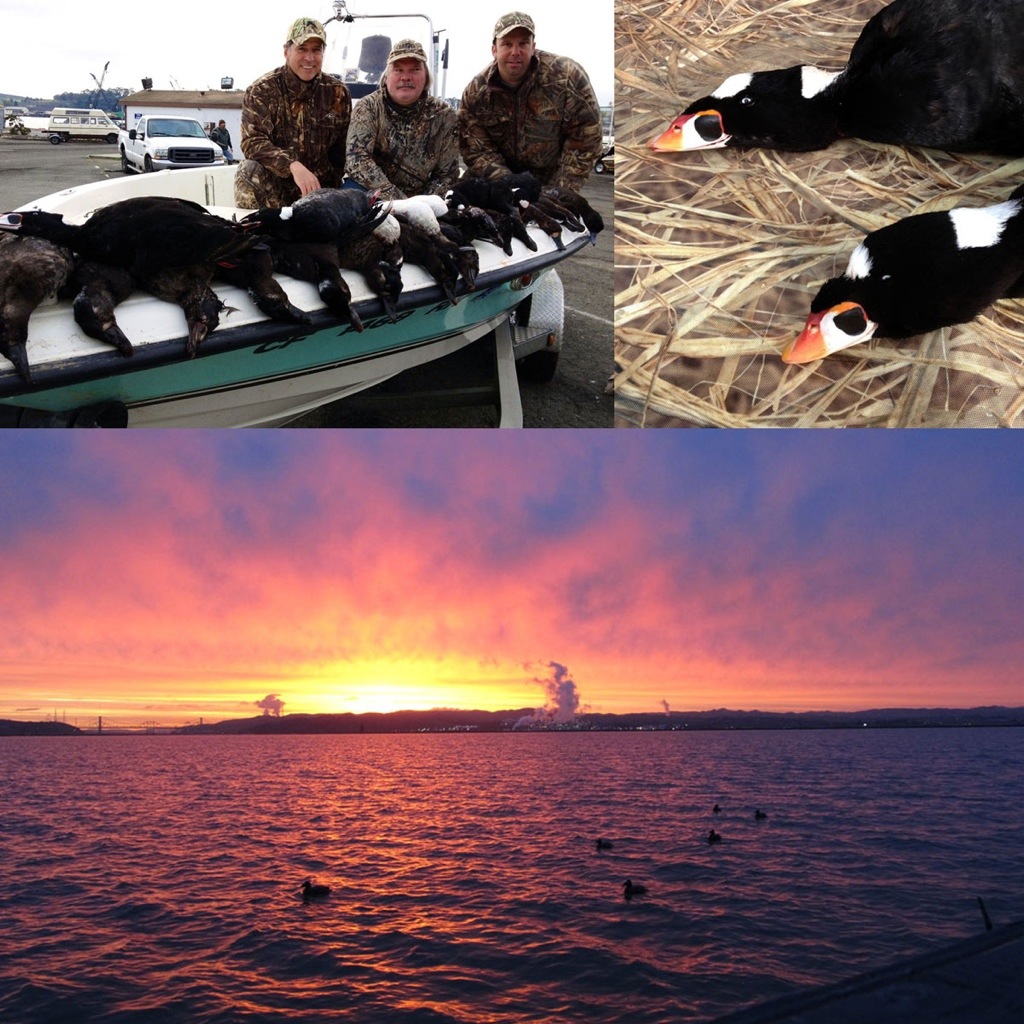
The boat cut through the black pre-dawn water of San Pablo Bay as our guide, Captain R.J., and his deckhand navigated toward a blind somewhere out there in the darkness. Peering out from my hood, I watched the twinkling lights of Vallejo get smaller and smaller, excited to be going on my first and long-awaited sea hunt for ducks.

It wasn’t long before we glided in next to the blind, a rectangle of plywood and woven palm leaves, bobbing at anchor on two pontoons. Guns and gear were handed over after we boarded, while the crew went back out to lay strings of decoys, blue bills and scoters. When the east began to glow we loaded our guns and waited, in my case, for the first site of ducks I’d never seen before except in pictures.

The wait wasn’t long. Small clusters of dots appeared in the distance, low, right along the line where sky and water meet. The dots got bigger, swinging back and forth, until suddenly and for a split second only, ducks zoomed through the decoy string and were gone, no more than a couple of feet above the water! It was like that all morning, every fifteen minutes or so. Blue bills, scoters, even the occasional canvasbacks.

As a pond hunter used to shooting at ducks flapping above the decoys, silhouetted against the sky, I’m not sure I ever got used to shooting down at sea ducks speeding by as black blurs against dark green water. But third shots placed well ahead managed to get a few of them, after the first two ripped up the water just behind.

When R.J.’s partner motored in and fished out the last of our limits, the hunt was over. And I was sorry to see one of the most exciting, different, and challenging duck hunts I’ve ever been on come to end. Now it’s time to get out that crock pot, gather up some onions, potatoes, carrots and broth, and see about some sea duck stew.

20121216-130318.jpg

The Greatest Pleasure?

•September 20, 2012 • Leave a Comment

By Neil Beltran

“WARNING!” a website for duck calls announces, as heavy

metal music blares in the background: “We are not responsible for the

massive carnage that could be imposed on the waterfowl population

after the use of these calls.”

This site is not alone in the use of jagged-edge verbiage; nowadays hunting magazines and hunting-related product websites offer up lots of Charlie Manson-esque lingo. When I first started hunting, later in life than most, hearing “whack ’em and stack ’em” and “if it flies, it dies” made me wince. Those phrases seemed more suited to callous market hunters and poachers than to sportsmen who claimed to love the whistling of duck wings in the dark and the rich sunrises that followed. It made no sense.

Today of course, those slogans are tame. Every season brings more products promising to super-size my ability to annihilate, massacre, and assassinate my prey, to make them rue the day they flew over my blind or strolled beneath my tree stand.  But despite a deep and vigorous passion for hunting, and many days of coming back from the water or woods empty-handed, I can’t seem to conjure up any ill will or anger towards the animals I pursue. In fact, it’s the opposite. I love them. I’m amazed by them sometimes and outwitted by them often. And I respect them, alive or dead. Even when an advertiser tells me to “Exact Your Revenge” with their rifle scope, or a network pushes me to watch a show to hear “Wild hogs squeal for mercy,” I’m pretty sure I’m not in it for those things. Advertisers and TV show promoters must think otherwise, but I just don’t FEEL like a serial killer.

“Seasons Change, and So Did I . . .”

“…You need not wonder why,” The Guess Who go on to advise in the 1969 hit. But I can’t help but wonder. I’ve always thought of hunting as the noblest past-time, even before I came fully into it. It conjured up images of prehistoric men and mammoths. Daniel Boone’s wilderness acumen and Teddy Roosevelt’s vision of the hunter-poet-conservationist. A pipe-smoking Ward Cleaver type in black and red wool jacket, a made-in-America rifle from Sears in his hands. A 10-year-old me with my BB gun, stalking varmints in the creek behind my urban house.

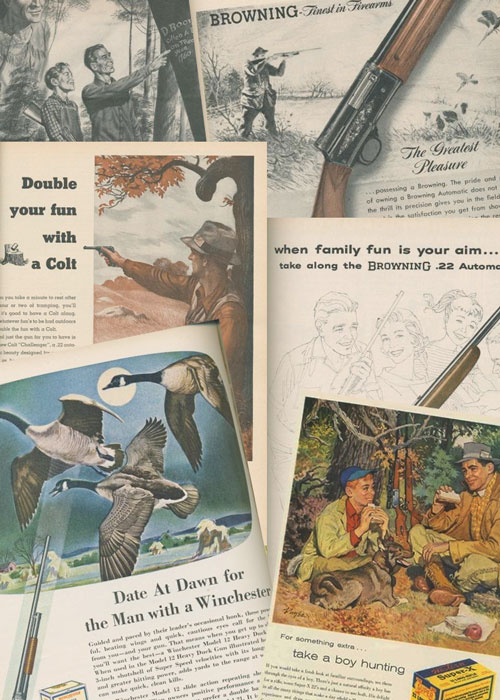
Editorially speaking, the shows and magazines still try to pay homage to the clean, clear sense of adventure, respect for animals and conservation, and family fun that hunting was known for in the 40s, 50s, and 60s. So why are so many marketers, who presumably know their audience’s demographics pretty well and can even anticipate trends now and then, on a completely different page? When did hunting go from “The Greastest Pleasure,” as one old Field & Stream advertiser called it back in the day, to blood-splattered, Helter Skelter? What’s changed? Why is the language of hunting morphing?

The New Demographics

Has the typical hunter changed? Maybe, at least in terms of age. We tend to be older. That should mean some carryover of traditional approaches and attitudes, you know, old school. But perhaps we’re a different kind of older, one that feels stressed, compressed and more financially depressed than grandpa in his old plaid coat or canvas waders. We have less free time — rather than being retired or looking forward to it, we’re working extra hours or two jobs to make ends meet, knowing that 70 is the new 65. Hunting costs more, for the basics as well as for a truckload of gear and gadgets we feel we need to compete with others in the fewer, farther, and more crowded places we can hunt. Gas takes a bigger chunk out of our personal GDPs than prior generations, let alone double what it cost a few short years ago. Maybe all this pressure has some of us kicking the dog. Well, maybe not the dog, he’s got retrieving to do. So are marketers thinking we’re feeling a need to kick the deer instead? Did some pop consumer psychologist tell them that this older generation, many of whom came of age during the protest 60s and self-absorbed me generation 70s, didn’t get enough rubber ducky as a child and thus has a deep-seated need to thrash every real one that flies by? Or that carnage is a substitute for lack of carnal, due to a bad prostate? Ridiculous? Yeah, but marketers wouldn’t be treating us like psycho killers if it wasn’t working. So it must be resonating somehow.

The other demographic shift is a good one. While we aren’t replenishing our numbers with young hunters at the hoped for rate, we do seem to be adding women. The Daily Beast reported that in 2011, there was a 28.5 % increase in the number of women buying guns for hunting. Brands of women’s hunting apparel are springing up. In my own experience at public refuges in California over the past 10 years, I’ve seen the presence of women hunters at the morning check-in gathering go from zero to more than a dozen. But that raises more questions and answers none when it comes to why there’s a shift toward blood-thirstier phraseology. Shouldn’t the presence of women in the sport, and a desire to add more, lead to kinder, gentler language? Shouldn’t marketers be talking about how hunting empowers, how it can bring a family closer and provide more indelible memories than a whoom-zoom day at Disneyland? Or do they think any woman who wants to hunt MUST be a grrrl. Someone who wants to take her deadly feminist revenge on males – or at least other species served up as whipping boys. Not the women hunters I know. I wonder if recruiting women hunters would be easier if hunting’s marketed image were more like it was mid-century.

Death from Above

Or is this death-from-above commando imagery that’s coming from marketers simply a knee jerk reaction, because we’re at war? Remember when you used to see someone in public in camo? It was like spotting an old friend. No introductions, no formalities. “What d’ya hunt?” was the first thing said and the conversation after that flowed easily. Now the camo-clad are soccer moms, petulant teens, fashionistas, and PETA members. That’s not really home front support for the troops. It’s just a sign that war permeates.

So maybe marketers figure we need a little Fallujah with our firearms advertising? There certainly is a big push to get military-style rifles onto the deer and varmint-hunter’s gun rack. (I enjoy shooting these guns, by the way, but there’s just something more “deer” about my Browning A-Bolt.) I know that war guns have become sporting guns before, but I don’t see that the language of war ever became the language of hunting during those past conflicts. Maybe they think the ones who aren’t serving want to play soldier?

Speaking of youth. It may also be that marketers trying to woo a younger hunter are simply using the language of video games. That’s probably appropriate, since most young hunters spend three months every year shooting at animals, and nine months shooting at zombies, aliens, cyborgs, and assorted barbarians. If the search-and-destroy themed hunting ads aren’t aimed at me, I get that. The problem is that I see them. And so do a lot of other people.

The Future of Hunting

Not that Ted Nugent is the best example, especially after swooping out of the sun in a chopper to hunt down pigs Apocalypse Now style, but “Uncle Ted” does make one very good point: we justify hunting in all kinds of technical ways to the non-hunting public — but don’t call hunting what it is — fun. And it does build character, self-reliance, family traditions, and soul-soothing, mind expanding experiences we’ll never get from a day spent on Facebook. Those are the selling messages I’d like to see in the hunting world. Of course, I will continue to enjoy hunting no matter what approach marketers take. But what about those “other” people, the ones who don’t hunt, the ones who – like it or not – have the future of hunting in their hands?

It’s been my experience that there are only one or two degrees of separation between hunters and non-hunters. Nearly every non-hunting friend, relative or neighbor I’ve talked to has fondly recalled their father’s or grandfather’s hunting stories. That they have a brother who hunts, or grew up where hunting was a big deal in their town. But as time goes by, that separation widens. Even now, when some aspect of hunting comes up for a vote, as it has in California with SB 1221, what is there to sway the debate in favor of hunting, against the power, money and lies of the Humane Society of the United States? The constituents of Ted Lieu, a state senator representing Torrance who sponsored the bill to end hunting bears and bobcats with dogs, probably don’t know too many hunters. They probably don’t notice the hypocrisy in Mr. Lieu’s position that it’s okay to hack the fins off sharks for soup, but not to pursue mammals with dogs (because one is his heritage, the other is ours). But they can look at the hunting world and see, not the positive outdoor experience depicted in ads of old, but rather a violent, vengeful, cruel, blood-thirsty obsession. Because that’s what a lot of the industry’s marketers are selling.

So a teenage video gamer somewhere buys a murderously-effective duck call. Meanwhile, a much, much larger audience of non-hunters and voters may be buying into something else: that the reverent, respectful hunter they may have known growing up is gone. And what stands in his place should be stopped, or at least left to wither and die.

[Author’s Note: Nothing I’ve written is meant to demean any product, magazine, or TV show specifically or generally. It’s the way some of them are communicating with us — and inadvertently, perhaps, with the non-hunting public, who happen to vote, that concerns me. And probably should concern you too.]

The Wild Side of Santa Catalina

•December 1, 2011 • 4 Comments

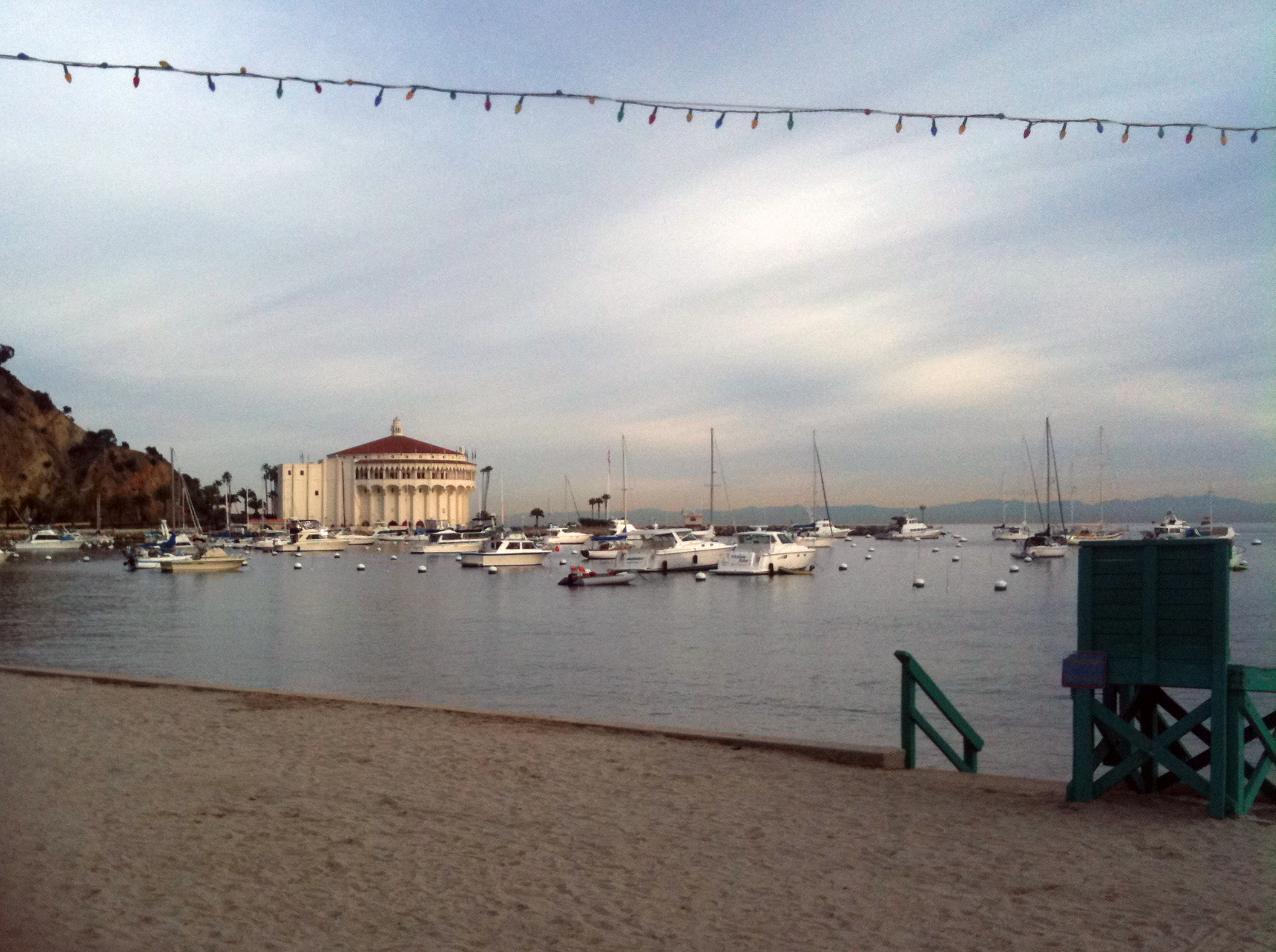
I was in a dive shop when I first heard there was deer hunting off the Southern California coast on Catalina Island. After emerging from the ocean by the old casino that attracted thousands of couples to the world’s largest circular dance floor in the 30s and 40s, I asked around. Sure enough, there were a lot of deer on the island – unwelcome inhabitants it appeared, since they are not native – and an outfitter had the concession for hunting them.

The Catalina Casino, an Art Deco dance hall built by William Wrigley in 1929

The brochure from Wildlife West arrived back at home a little while later, but life got stormy and it sat collecting dust with a pile of hunting magazines for two years. When things calmed down, and the urge to hunt deer returned, my first thought was the 3 points I had in the Iowa draw. But something closer to home seemed more in order, and that’s when I remembered Catalina.  Eight months from the season’s start, I called – and they were booked. Six months out I got a call from them;  a spot had opened up at the end of November!

My aim was venison for the freezer, so I opted for a two-day, two-deer management hunt: a fork-horn probably, and a doe, but with all the amenities – lodging, meals, guide, meat care – of the three-day trophy hunts. And there are plenty of gnarly-racked bucks on Catalina’s 75 square miles, tucked away in the island’s myriad cracks and crevices.

The ferry ride over was pleasant and effortless; the crew safely stowed my rifle with a smile and none of the angst of an airline ticket agent (Southwest Air being the exception, of course). Out the windows, dolphins glided in and out of the glassy water. Getting to Catalina already had getting to most other hunting locations beat. Several other hunters – all returning Wildlife West clients – were on the boat, gun cases making them easy to spot.

We were met at the pier by our guides, who loaded up our gear and took us, not to the rustic camp I was expecting but to a very nice vacation rental typical of Avalon. To be honest, I’ve bathed in enough cold water creeks; a warm cottage and a big screen TV was all right with me. On the coffee table sat photo albums of Catalina monsters taken in past seasons, and for a fleeting moment I wished I’d upgraded my hunt.

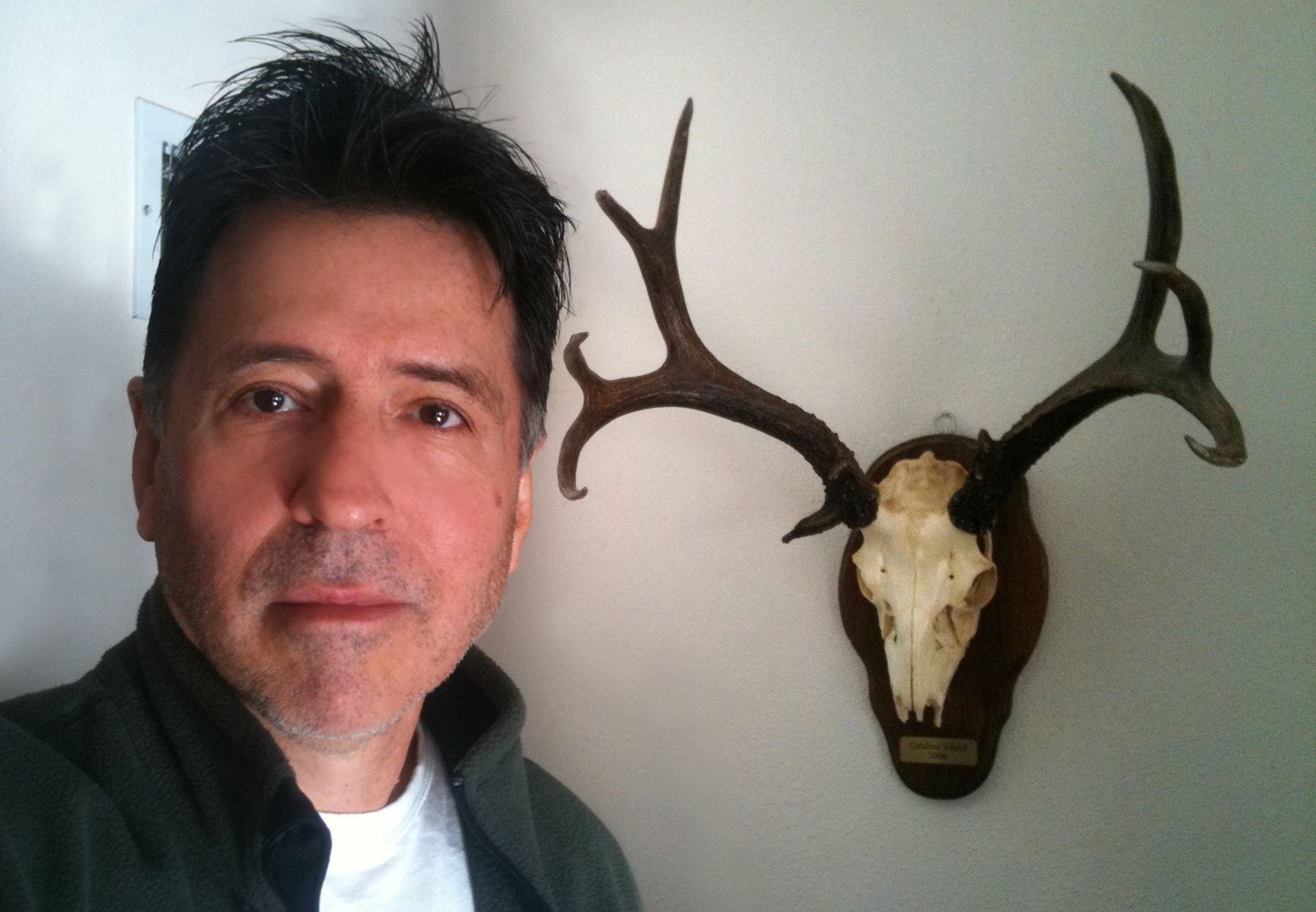
Trophy deer mount

This nice mount and all the wall photos of past trophies had me wishing I’d upgraded my hunt.

We did a little hunting that afternoon and evening, driving roads closed off to tourists and glassing hillsides studded with rock and scrub oak. Every now and then one of us would spot a small group of deer and we’d ease out of the truck for a closer look. Being later in the season, the animals knew what a truck full of hunters meant, and they quickly put some distance between us, or just grazed their way to even more distant hills or valleys. The next morning it was more of the same, and I began to realize that this Catalina deer hunt would be more about long-range marksmanship and working out the angles so a hit deer didn’t end up down in a steep ravine, irretrievable. This was a lot different from the treestand bow hunting I enjoy so much, where you get to study your game a long while before, and if, you ever get a shot at it.

Nothing stirred on the island as the day got hotter, hitting the 80s. That evening things got switched; I went out with a guide who wanted to go in on foot, which I welcomed after too many hours cooped up in the truck. My guide, all the guides, knew the island like the back of his hand, and we went to a promising area, venturing in on faith without spotting any deer. Making our way down slowly, we skirted meadows and squeezed through tangles of branches, glassing every few yards. Sneaking up to a low rise, my guide – Jim – waved me forward; a doe was feeding just on the other side, barely 50 yards away. I knelt down and put the crosshairs on her shoulder. The deer hide filled my scope, not the image I was expecting after all the far off deer we’d seen! A slow, steady pull on the trigger, trying to forget the .300 WSM’s coming recoil, and BOOM. One doe down.

Jim had spotted a buck a few hundred yards away just before, so we left the doe and repositioned for the buck. Sure enough, it would be a long range shot, 250 yards plus. The buck was the perfect management target, a fork on one side and a tall flat spike on the other. The sun was dropping down fast behind the island and the world was becoming monochromatic, making the slow grazing buck harder and harder to see. Finding him in the scope (the Nikon Monarch seems to roll the clock back about an hour in the evenings, I’ve found), I put the X on his upper shoulder, figuring the little 130-grain bullet would drop just enough. The big jolt, and the buck was down.

And then back up! I knew I’d hit him well enough, and in the woods would’ve just waited it out, picking up the blood and finding him later. But this was a different world, and in rugged Catalina, with the sea crashing against the rocks below you, and a dozen deep fissures leading up to the mountains above you, there’s only one goal: deer down now!

So I was racking another round and hurrying to find the buck again in the fading light. Crosshairs settled again on the buck as it crept up the distant hillside. Boom. Hit. Boom. Hit. Finally the buck was down to stay. Jim went to fetch the doe and then we hiked up to the buck. The shots were good shots, that passed through without much damage. Could’ve been the all copper bullets we’re forced to use in California’s large vulture – I mean, Condor – range.  Jim hauled the two deers’ worth of quartered meat and pieces up the steep hillside like a Swiss mountaineer, and we made our way in the dark back to the welcome sight of the truck about forty-five minutes later.

Back at the beach house, the sips of Jack Daniels tasted – in the words of Colonel Kilgore – like victory. It had been the perfect hunt for me; short and sweet, challenging enough to be satisfying, with the chance to experience the exotic secret wild side of an otherwise tame and familiar place. The guides know their business and their island, and that five of our group of six hunters were repeat clients says a lot. Looking through the photo albums and listening to the stories of past hunts, it was clear that a Catalina deer hunt can be whatever you want it to be. An up close and personal stalk or a long range test of marksmanship. A trophy hunt or a cull hunt. And for the guys in their 80s pictured in the albums, road hunting keeps them in the game, which is a great thing. Or you can go off road, down deep, and into the rough. Just know that it’s a long way back up.

I’m looking forward to picking up the steaks and roasts from the butcher later this week. And I’m glad I dusted off that brochure.

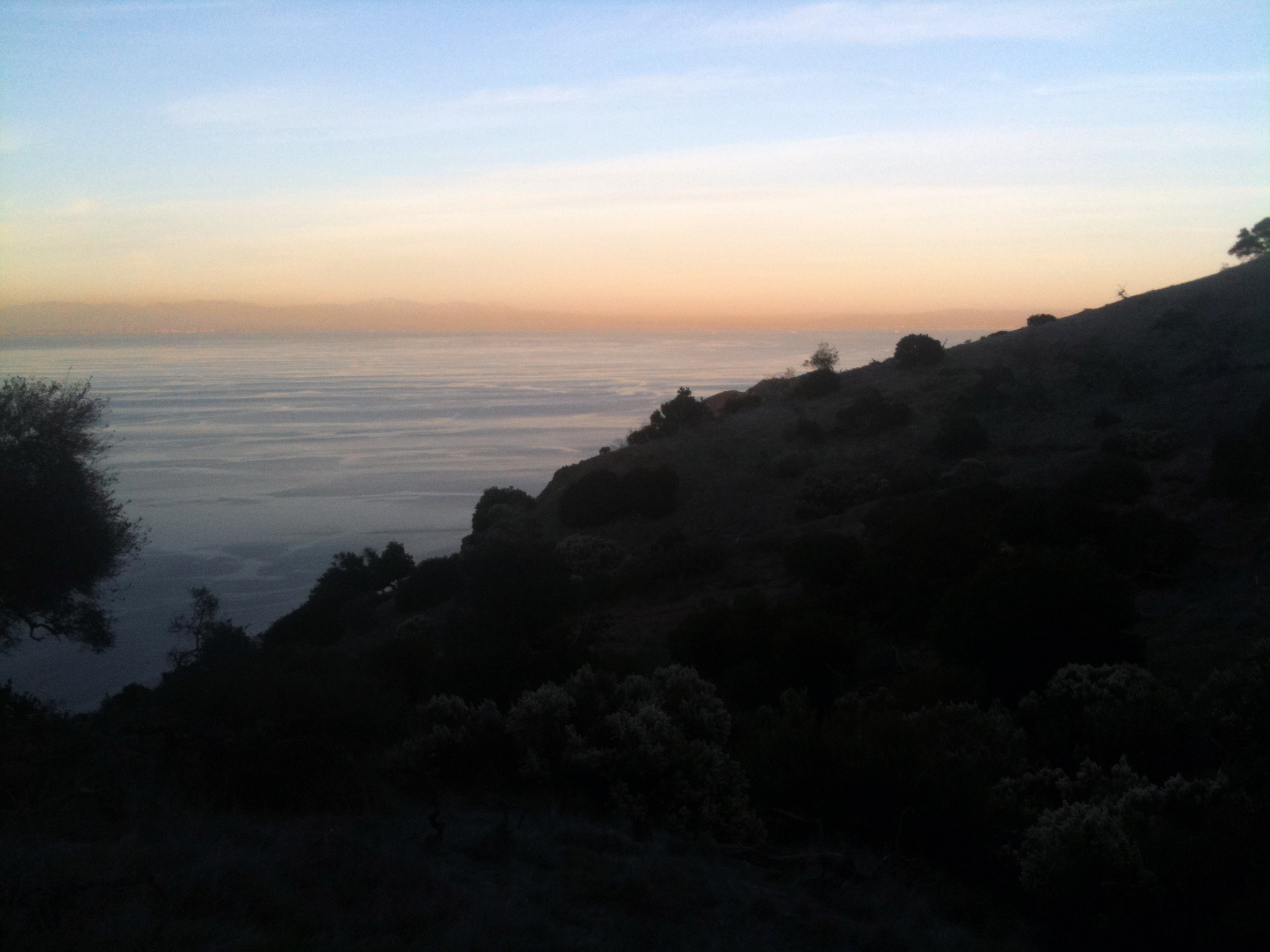
Nightfall on Catalina

Night falls on the island that was once home to Russian otter hunters, Yankee smugglers, and roving fisherman.

Of Dogs and Divorces

•March 24, 2011 • 1 Comment

Photo by Nathan Hunnicutt

The dog was the last straw.  At least that’s what the soon-to-be ex-Mrs. Zenhunter said.  Of course it wasn’t really the dog.  I’d wanted a retriever for years, to fetch the ducks my 52-year-old body was tired of chasing.  The constant marriage battle had left me feeling alone, unloved, empty, so it seemed like a good time to get a pup.  But Mrs. Zenhunter didn’t want a dog, and insisted that I compromise.  Now, in her mind, “compromise” meant NOT getting a dog.  But I did that most unreasonable thing anyway, what nearly 200 million Americans have already done: I got the dog.

And she filed for divorce.

So it was then that a 25 year marriage ended, and a new life with a dog began.  Schatzie (“little sweetheart” in German) is 11 months old and now I know what it means when a hunter jokes that he lost the house, the car, the kids in a divorce, but got to keep the dog. I truly do.

Schatzie has put the beat back in my heart. Whatever is worrying me fades away not long into our walks. Her enthusiasm for every blowing leaf, every whiff of a dog gone by before her, the total commitment to speedily bringing back the pine cones I hurl inspires me. I smile at her antics and clumsiness, marvel at the fervent desire to please, and am fascinated by how she pieces together what’s expected of her and learns the job she was born and bred to do.  She never gets frustrated or impatient or angry. When a pine cone I’ve thrown lands in a bush or behind a fence, she studies the situation, working out the best way – over, under, around – to get what she’s after, to retrieve for me what she believes I’m after.  Hers is a life of love and service, satisfaction and joy in the simplest things. She is teaching me.

At 5 months, I took Schatzie out for her first waterfowl hunt. The divorce war and moving myself, my things, my business had taken its toll on her training, so I went expecting little of her.

A friend and his son joined me in the blind, good shooters both, and we downed 11 ducks that day. Schatzie knew what to do at the very first bang-splash. She’d watch our faces and guns and once we showed her where the duck had fallen (she was too small to see over the blind wall), she was off in pursuit. A couple of ducks tried to escape, diving under the murky pond water or into a gnarly bush. Schatzie got them anyway. All 11 were brought back swiftly, gently carried through some long swims, and dropped at our feet. I can’t take credit for it; her abilities are clearly innate, the result of good breeding through a long line of champion hunters.

I’m excited about next season. Schatzie will be a year and half old. Lawyers and asset struggles will no longer be casting their shadows on my thoughts. The blind will be a good place to be. There’s a new woman in my life, too, and next season that’s who we’ll be coming home to. She’s wonderful, and best of all, she loves my dog.

The Long, Hard Road to a Dream

•May 14, 2010 • 4 Comments

Two years ago, slogging through the cement-like mud of my local duck pond, legs on fire, dead tired, I had an epiphany. Hunters and fishermen lift and carry, push and pull, hike and haul, endure wind and waves, and most of all compete with the toughest of creatures. We’re athletes, hardcore ones at that. But we’ve been snacking like couch potatoes and pencil pushers. No wonder the game and elements defeat us sometimes, or at least make our sports harder than they have to be.

But epiphanies — those lightning strike realizations and inspirations — don’t get things done. They’re the spark, the first wisps in the foggy forming of a Dream. But the dream is really at the end of a long, hard road, not there at the beginning.

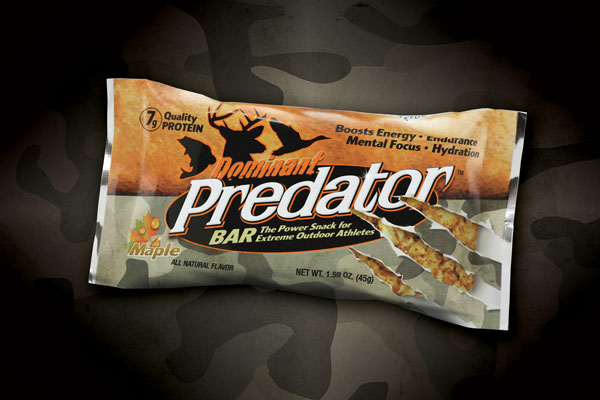
So a partner and I — him a fisherman, me a hunter — set about combining the considerable performance nutrition experience gained in our careers and created the Dominant Predator® snack bar. The first snack bar designed by and for the predator athlete. We made countless test batches, sprinkling in different kinds of protein, researched special nutrients no one else knew about to help with some of the extreme outdoor athlete’s needs, like better hydration, longer-lasting energy, alertness and focus.

Finally, we arrived at the right combination. A feast-worthy fusion of survival food, sports supplement, and something delicious that mom would make. Like a rice crispy treat, packed with performance enhancers. Legal ones, of course.

Then we begged, cajoled, lobbied, and campaigned to get big companies to produce our little first order of wrappers, trays, and snack bars. We built a website (predbar.com), bought liability insurance, found a toll-free number, formed a corporation (Fierce Foods, Inc.), registered our trademark, and a million other details that you know about if you’ve ever developed a product and started a company on a shoestring. For two years, it was one step forward, two steps back. Nights and weekends lost to spreadsheets, business forming chores, and the taming of all the wild, runaway details.

But last week the product finally arrived in our little garage bay warehouse. And we took an order from a little store in Wisconsin. A day after they got the product, they told us they had sold out. And it was at that moment that we realized, the inspiration that bred the dream had just cracked open to reveal a beautiful reality.

I don’t know if the Dominant Predator bar will be a big success or make a lot of money.  I do know I’ll never experience a stronger moment than when I heard from that store in Wisconsin, selling all their bars and saying people — hunters, construction workers, and the usual passing through travelers — had liked the package I designed and loved the taste of the bar. Those first people made my dream come true after two long, hard, uncertain years. What happens after, well that’s a place I can’t see or know. But I’m stepping on to the road leading to it, and the crunch of gravel under my boot sounds good to me.

Went for Hog, Got Bull

•March 9, 2010 • Leave a Comment

Saturday morning I drove 2 1/2 hours North to Wilderness Unlimited’s Benz Ranch for a couple days of hog hunting. Heard some earnest grunting once but never could locate the source. Mostly it rained. And rained. And when the rain disappeared, a heavy fog rolled in that could’ve rendered a whole herd of pigs invisible beyond 30 yards. So I packed it up and limped home.

Limped?

Yes, because the day before, walking a hilltop road around 5500,’ I came upon a group of cows. Not being a farm person, I give cows a wide berth as I do any animal that big and that stupid. So I veered to the right, a little downhill. Most of the cows moved off with a flip or two or their tagged ears. Except one: a young bull, I learned later. I watched him over my shoulder. Then he stomped, one leg then the other, snorted and, head down, charged me! I hurried down the hill, looking back in time to see him at a good gallop, gaining on me. So I picked up speed, easily done on a downhill run, and the distance between us increased – 20 yards, 24, 30, a little more than 30. And suddenly I was falling, knees crashing into the sod and sticks, hands, then body next, tumbling over a couple of times. Ended up beside the big oak I’d been headed for, a lot faster than my feet could’ve got me there, and hid behind it. The bull stopped short of the oak. What do I do if this beast comes around the corner, I wondered, fire a warning shot? Get my wife the game meat she’d much prefer – beef? What’s the trophy fee for THAT? I glanced at my gun, only to see dirt and grass coming out of the muzzle. Quickly ejecting the round and yanking the bolt out, I prodded and blew the barrel clear of debris, peaking around the big rough tree as I reassembled the rifle. The bull was ambling back up the hill to his harem. Were they impressed with his show of bravado, or had all of them forgotten what the commotion was all about? Out of sight, out of bovine mind?

I took the long cut back, always mindful of where a good wide tree stood, watching equally for pigs and cows. Well, a little more for cows after that. Back at camp, I nursed my banged up knee with a little bourbon and vermouth in a plastic stem glass. An unsuccessful pig hunt? Yes, but once again, hunting had proved to be a surprise waiting to happen. No truer words than that.

2010 SHOT Show

•January 25, 2010 • Leave a Comment

I expected new products but was surprised to see what some might say is our nemesis at this year’s Shooting, Hunting, Outdoors Trade show.

Most of the innovations were lost on me. Like, do women really need a binocular designed just for them, in plum and chocolate colors? Nikon thinks so. And is losing four ounces enough of a reason for me to trade my SBE II in for a Vinci? Nah.

Less techy and more practical was a new and growing company that’s making mannequins for the outdoor industry. Yeah, seems trying to get the GQ models to hold a bow was resulting in a lot of broken arms. Now there are ones configured for tree stands, shooting rifles, and reeling in fish. Genius.

Being a waterfowler, mainly, my eyes went where my experiences have taken me. To a cart slash layout blind slash stand up blind with wide flat wheels that might, just might be able to handle Wister mud. And to a round safe that let me spin my way to my chosen gun, instead of pulling them all out to get that one way in the back. The cart was designed by Dan Klein at Ducks & Bucks. The safe is from Pendleton.

The highlight of the show for me? Seeing R. Lee Ermey was cool. So was seeing a lot of hunting legends, like Jeff Foiles and Jeff Miller. But shaking hands with Scott Leysath was the real thrill, since his recipes have often graced my grill.

My overall impression of the SHOT Show was the same I get when I go into a casino in Vegas: man, there’s a TON of money flowing around this industry. MINE!!

THE VIDEO